Posted in The Robert Horatio Walker Story

Part 2 – 1861-1869

The Civil War brought a great deal of turmoil to Richland County, as there were sympathies for both sides. Abraham Lincoln and Stephen Douglas, both Illinois natives, spoke at separate political rallies in Olney, the county seat, on September 20, 1856. I picture my Ancestors loading up a wagon and making the 10-mile trip to see the candidates, discussing the speakers into the night as they returned back to the farms. Those were uncertain times in our country.

When Lincoln was elected, Jefferson Davis immediately resigned from the Senate and began to form what was to become the Confederate States of America. While regular folks hoped the crisis would pass, when Fort Sumter was attacked in 1861, the Union began to draft men into service. Most citizens rallied around the Union, but it was necessary to have troops stationed in Olney to enforce the draft, as union deserters found refuge among local citizens. Ultimately, an estimated 1,700 Richland County citizens fought for the Union in the Civil war.

In 1861, our families didn’t have any sons old enough to be drafted, as the minimum age (without parents’ consent) was 18. The McWilliams’ s adult sons had moved to Iowa and other parts several years earlier, and both served in their states’ regiments. At the Kinkade house, James and Alexander, were only 16, and over at Ebenezer Walker’s farm, Robert was only 15.

That didn’t stop Robert Horatio Walker, mind you. He was a musician, and you could volunteer as a drummer as young as 12, so off he went, joining up with the 48th Illinois Regiment.

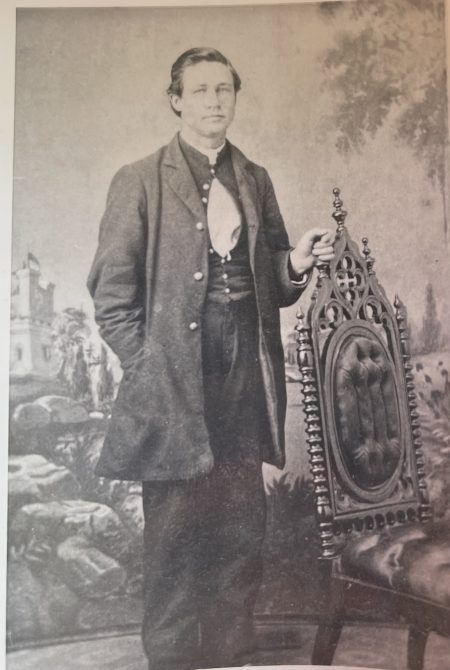
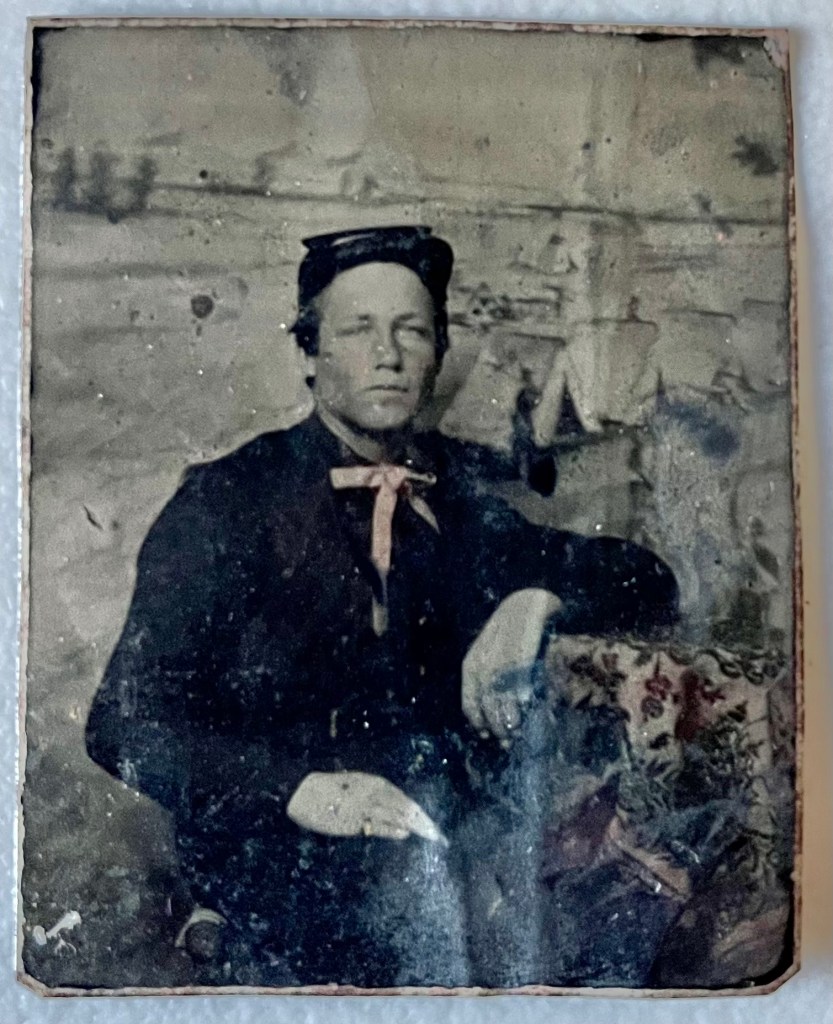
Robert Horatio Walker, Private, 48th Illinois Regiment

There is a marker in the cemetery where he is buried…

In 1861, at age 15, Robert enlisted as a drummer boy in the 48th Illinois Volunteer Infantry. Just think of that – 15-years-old, full of piss and vinegar, he sets off with a drum to save the world – and it’s true! I have papers showing he mustered in as a musician in 1861, though his age is listed as 17.

Drummer boys played a crucial role in the Civil War, using specific drumbeats to relay commands and orders from officers to soldiers. They also helped with the regiment’s daily schedule by signaling camp activities like reveille and marched with troops to keep time. In non-combat roles, they acted as stretcher-bearers, assisting wounded soldiers and sometimes acting as assistants to surgeons. It was an important role and you had to have a good deal of musical talent to do the job well.

At the Battle of Shiloh he beat the long roll to bring his regiment to arms during the first confederate attack. The “long roll” is the signal to attack.

The Battle of Shiloh began with a surprise attack by Confederate forces on April 6, 1862, catching Union troops under General Ulysses S. Grant unprepared. Our hero was in the 48th Illinois encampment, near the area that was breached, when he woke up or witnessed the attack, and went to his drum to alert the sleeping troops. Though his quick action may have saved lives, the regiment lost over half of its men in the battle.  

By age 17, he was carrying a musket and before the end of the war had been wounded twice. He fought in 20 major battles and many minor fights.

Having lost so many troops at Shiloh in 1862, I’m sure they soon needed Robert to fight, so he was “mustered in” as a private in 1863. There were about 50 major battles in the Civil War, though there were also nearly 100 other significant battles and over 10,000 total military engagements. Robert’s regiment was in the thick of action.

He traveled 11,450 miles, marched 3,000 miles, including Sherman’s March to the sea.

I thought this was hyperbole until I saw very similar figures on a rather official-looking document regarding the campaigns Robert described.

Of the 900 members of his regiment, 16 officers and 365 men perished in the Civil War.

The 48th Illinois regiment suffered 10 officers and 113 enlisted men who were killed in action or mortally wounded and 6 officers and 251 enlisted men who died of disease, for a total of 380 fatalities. Yet, when it was time for them to re-enlist, 99% of them did; they ended up fighting at dang near all of the bloodiest battles that finally ended the War, including Missionary Ridge, the entire Atlanta Campaign, and followed Sherman up the Atlantic Coast, setting fire to everything as they went. The Confederates finally capitulated in April, 1865.

In 1867, he enlisted in the Regular Army and fought in the Indian Wars for two years.

That would be “Red Cloud’s War”, a successful conflict led by Oglala Lakota Chief Red Cloud against the U.S. Army to protect Sioux hunting grounds. The natives won that war, forcing the U.S. to sign the Treaty of Fort Laramie (1868) and abandon the forts, establishing the Great Sioux Reservation.

It was during his service in the Indian Wars that Robert fell in love with the country that now makes up North and South Dakota, Colorado, Montana, Idaho, and all the way up into Canada. His stories of those days, those times, and those mountains were as colorful as his stories of the Civil War.

He finally headed back home to Richland County, IL in 1869.

Stay tuned

Posted in The Robert Horatio Walker Story

Part 1- 1818-1860

It was this cabinet card that started me wondering about my great-grandmother’s family.

The people were identified on the back in her distinct cursive: l-r: Grandfather Kinkade (my 2x great-grandfather); Uncle Robert Kinkade, of the St. Louis Kinkades (Joe’s brother); Uncle Robert Kinkade (Joe’s son); Kathleen Kinkade (my great-grandmother); Uncle Bob Walker; Uncle Charles Kinkade; Grandmother Kinkade (my 2x great-grandmother).

It’s so nice to have photos with identification! It gave me a boost with the Kinkade tree, but who was this Uncle Bob Walker and how did he fit in? That search has led me 1000s of miles and back again.

Robert Walker was the nephew of the lady sitting in the front-right of the picture, identified as “Grandmother Kinkade”, aka Mary Ann Walker Kinkade, so he was actually Kathleen’s first cousin once-removed. But…he was married to Kathleen’s mother’s sister, Maggie McWilliams Walker, so he was also her uncle. This Uncle/Cousin, Robert Horatio Walker, lived quite a life! I’m here to tell his story…

Let’s meet the Kinkade/McWilliams/Walker families who worked, played, worshiped, and loved in Richland County, Illinois, in the 19th century.

Illinois became a state, carved out of the Northwest Territory, in 1818. That same year, the Methodist Episcopal Church assigned two Circuit riders, Shadrach Ruark, Sr. and Joseph C. Reed to Southeast Illinois, around 10 miles west of the Wabash River. The two preachers brought their families, and bought land to settle and farm just south of the stagecoach road that they’d followed from Ohio.

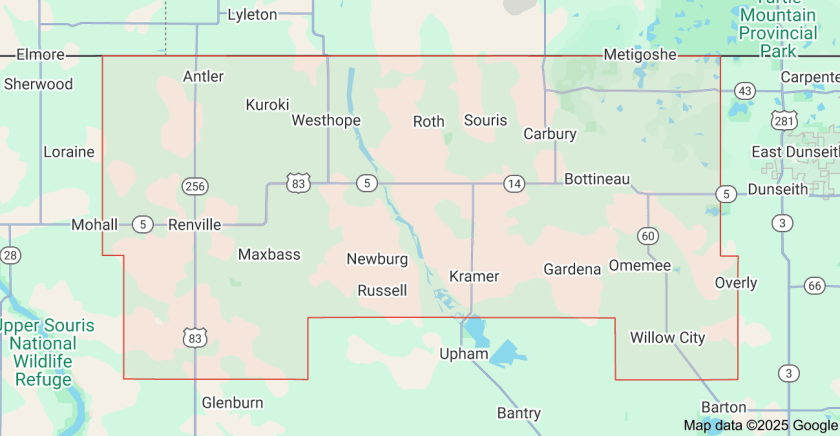
Current map of Richland County, Illinois. From 1818-1841, this area was Edwards County, which is now at its southern border. See Calhoun (formerly Fairview) and Parkersburg.

The Reverend Ruark platted the community of Fairview (now Calhoun), and built a church there. The community grew quickly with stores, blacksmiths, homes, and even a hotel. While it was not officially organized under village government, the community of Fairview became well-known.

It was about 1830 when John and Julia Walker and family arrived from Ohio. Honestly, there were several families of Walker who arrived around that same time, forming a bit of a commune around the Fairview area. John and Julia bought acres near Fairview and settled into farming. Theirs was a blended family, as both were widowed at some point. I’ve not been sure about whose is whose in the group, but it included James Newell, 13; Elizabeth, 24; Sarah 19; Ebenezer, 15; and Mary Ann, 13, and James Walker, 7.

Next to check into the county were Joseph and Margaret Kinkade, Irish immigrants who had stepped off the boat just four years earlier. While still in Pennsylvania, Joseph and Margaret had their first child, Susan. They, too, had family already settled in the area, and the little family arrived in 1837, and started cranking out babies: Margaret, 1837; Elizabeth, 1839; Matilda, 1841; Alexander, (my 2x great-grandfather) 1845; Martha, 1848; and Joseph, 1850. That’s eight babies in 14 years.

Meanwhile, Ebenezer Walker married the Reverend Reed’s daughter, Abigail, in 1841. They started their family in 1843 when their daughter, Julia, was born, followed by their son, Robert Horatio, in 1846; Joseph, 1849; Sarah, 1852; John, 1857; Harry, 1860.

Ebenezer’s sister, Mary Ann, married the Reverend Ruark’s son, Milton, in 1844. They had a son, James, in 1845. Tragically, Milton died in 1847.

It was 1848 when George C. McWilliams and his wife, Catherine, arrived to farm land that was just down the road from the Kinkades and Walkers. There were already seven children in the family, as the couple was in the habit of having babies every two years. Their ages upon arrival from Pennsylvania: Philip, 14; George, Jr., 12; David, 10; Sarah, 8; Nancy, 6; Mary Elizabeth, 4; and Ann Eliza, (my 2x great-grandmother) was 2. Their daughter, Margaret “Maggie”, was born in 1850, and Catherine had twins, Hugh and Hannah Isabelle (later called Belle) in 1853. There may have been more, but I find no record of them surviving to adulthood, so we’ll stop at ten.

1850 brought hard times to the community. Ebenezer and Mary Ann’s parents, Julia and John Walker, died within 18 hours of each other, possibly from milk sickness, a disease that comes from drinking milk from cows that ate the toxic white snakeroot plant. There was something going around that year, for sure. The McWilliams Family lost two daughters, Nancy, 8, and Mary Elizabeth, 6, and Margaret Kinkade, Joseph’s wife, also died, leaving Joseph with seven! children, including six-month-old, Joseph, Jr. The whole community was in mourning.

It wasn’t long before Joseph remarried. He wed the widow Mary Ann Walker Ruark in 1851. Mary Ann’s son, James Ruark, was the same age as Joseph’s son, Alex, and he was blended right in, as along came four more babies: Harriett, 1852; Robert, 1854; and Charles, 1856; John, 1861 (died 1862). That’s a grand total of twelve children in the Kinkade household.

The new generation – about 30 of them! – grew up together, attending school and church together, and working on the family farms. These were Scots-Irish folk, and they sang, played stringed instruments (eventually pianos), and danced a fierce jig. The community grew, sharing the happiness and grief of life in those years.

Along came that pesky Civil War…

Stay tuned…